



Neurokinin Receptor
NK receptor; Tachykinin receptor
There are three main classes of neurokinin receptors: NK1R (the substance P preferring receptor), NK2R, and NK3R. These tachykinin receptors belong to the class I (rhodopsin-like) G-protein coupled receptor (GPCR) family. The various tachykinins have different binding affinities to the neurokinin receptors: NK1R, NK2R, and NK3R. These neurokinin receptors are in the superfamily of transmembrane G-protein coupled receptors (GPCR) and contain seven transmembrane loops. Neurokinin-1 receptor interacts with the Gαq-protein and induces activation of phospholipase C followed by production of inositol triphosphate (IP3) leading to elevation of intracellular calcium as a second messenger. Further, cyclic AMP (cAMP) is stimulated by NK1R coupled to the Gαs-protein. The neurokinin receptors are expressed on many cell types and tissues.
Neurokinin Receptor Isoform Specific Products
All Product Categories
-
Neurokinin Receptor Inhibitors
(21)
View all products
-
Neurokinin Receptor Agonists
(41)
View all products
-
Neurokinin Receptor Antagonists
(156)
View all products
-
Neurokinin Receptor Activator
(1)
View all products
-
Neurokinin Receptor Modulators
(7)
View all products
-
Neurokinin Receptor Controls
(3)
View all products
-
Neurokinin Receptor Related Products (276)
Related Products (276)

-
Antibodies (4)
-
Neurokinin Receptor Isoform Comparison
-
Vofopitant
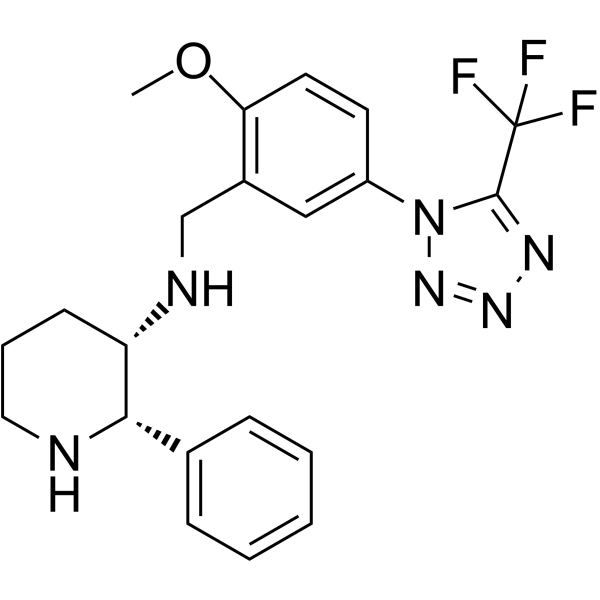 0 ImagesSynonyms: GR 205171Vofopitant (GR 205171A) is a blood-brain barrier-permeable NK1 receptor inhibitor with a pKi of 9.02 in mice. Vofopitant blocks vomiting-related responses and inhibits pseudoptyalism. Vofopitant exerts anxiolytic effects, regulates 5-HT receptor function and increases central 5-HT release. Vofopitant improves hyperarousal symptoms of post-traumatic stress disorder. Vofopitant can be used in research related to depression, anxiety, vomiting and postoperative nausea and vomiting.
-
Substance P (1-9)
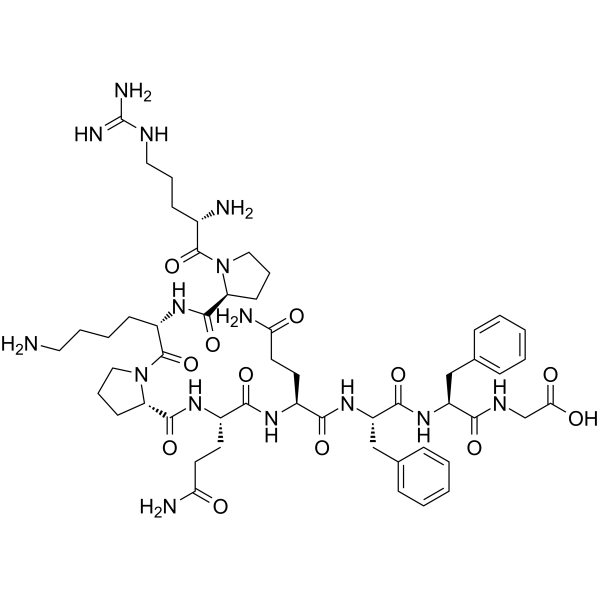 0 ImagesSubstance P (1-9) is nonapeptide, which decreases the inactivation of substance P by the guinea-pig ileum and urinary bladder.
-
Fosnetupitant chloride monohydrochloride
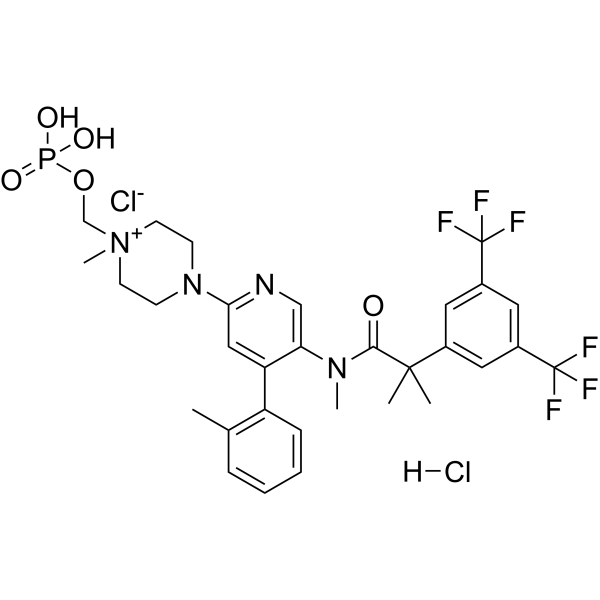 0 ImagesCat. No.: HY-133206ACAS No.: 1643757-72-5Synonyms: Pronetupitant chloride monohydrochlorideFosnetupitant chloride monohydrochloride (Pronetupitant chloride monohydrochloride) is an NK1 antagonist with pKi values of 9.5, 6.1 for human NK1 and NK3 receptor, respectively. Fosnetupitant chloride monohydrochloride is a methylene phosphate prodrug of Netupitant.
-
CP-96,345
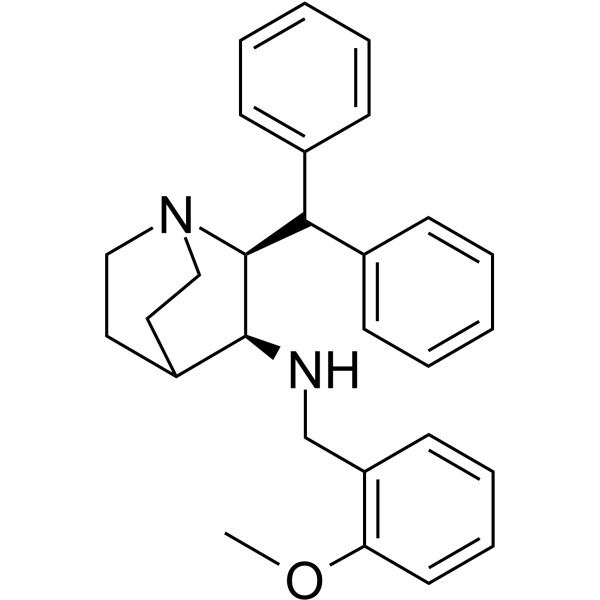 0 ImagesCP-96,345 is a specific, highly potent, and orally active tachykinin and substance P receptor non-peptide inhibitor. CP-96,345 prevents the drop in blood pressure evoked by substance P and neurokinin A. CP-96,345 can be used for researching neurogenic inflammation.
-
Substance P (5-11) TFA
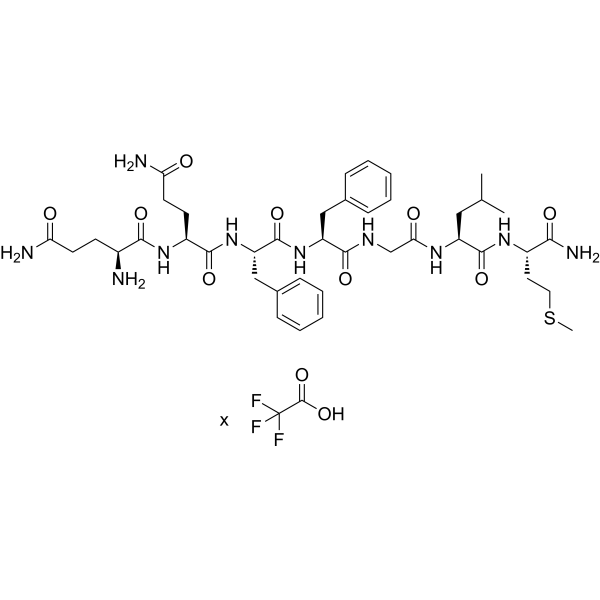 0 ImagesCat. No.: HY-P3890ASubstance P (5-11) TFA TFA, the C-terminal heptapeptide of Substance P (HY-P0201), is a neuropeptide. Substance P (5-11) TFA TFA binds to NK-1 tachykinin receptor.
-
[Glp5,(Me)Phe8,Sar9] Substance P (5-11)
![[Glp5,(Me)Phe8,Sar9] Substance P (5-11)](https://file.medchemexpress.com/product_pic/hy-p3801.gif "Click to View [Glp5,(Me)Phe8,Sar9] Substance P (5-11) Product Detail") 0 ImagesSynonyms: DiMe-C7[Glp5,(Me)Phe8,Sar9] Substance P (5-11) (DiMe-C7) is a Substance P (HY-P0201) analogue that has approximately the same effects as Substance P (HY-P0201) on neurokinin 1 receptor (NK1R) in rat brain, but with a much longer duration of action. [Glp5,(Me)Phe8,Sar9] Substance P (5-11) selectively activates dopamine metabolism in the mesencephalon and midbrain cortex of the rat brain. [Glp5,(Me)Phe8,Sar9] Substance P (5-11) also increases motor activity and induces recovery of addictive agent-seeking behavior in rats.
0 ImagesSynonyms: DiMe-C7[Glp5,(Me)Phe8,Sar9] Substance P (5-11) (DiMe-C7) is a Substance P (HY-P0201) analogue that has approximately the same effects as Substance P (HY-P0201) on neurokinin 1 receptor (NK1R) in rat brain, but with a much longer duration of action. [Glp5,(Me)Phe8,Sar9] Substance P (5-11) selectively activates dopamine metabolism in the mesencephalon and midbrain cortex of the rat brain. [Glp5,(Me)Phe8,Sar9] Substance P (5-11) also increases motor activity and induces recovery of addictive agent-seeking behavior in rats.
-
[Sar9] Substance P
![[Sar9] Substance P](https://file.medchemexpress.com/product_pic/hy-p1738.gif "Click to View [Sar9] Substance P Product Detail") 0 Images[Sar9] Substance P is a potent and selective neurokinin (NK)-1 receptor agonist.
0 Images[Sar9] Substance P is a potent and selective neurokinin (NK)-1 receptor agonist.
-
Hemokinin 1, human
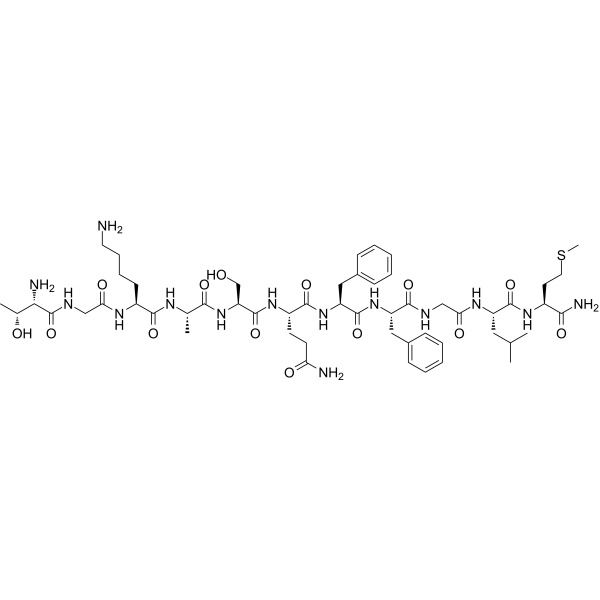 0 ImagesHemokinin 1, human is a selective tachykinin neurokinin 1 (NK1) receptor full agonist. Hemokinin 1, human is a full agonist at NK2 and NK3 receptor. Hemokinin 1, human can produces an opioid-independent analgesia.
-
Octahydroisoindole
 0 ImagesSynonyms: Octahydro-1H-isoindole; Perhydroisoindole; HexahydroisoindolineOctahydroisoindole (Perhydroisoindole) is a substance P antagonist that can cross the blood-brain barrier and is useful for the study of movement disorders associated with central nervous system diseases.
-
Fosaprepitant
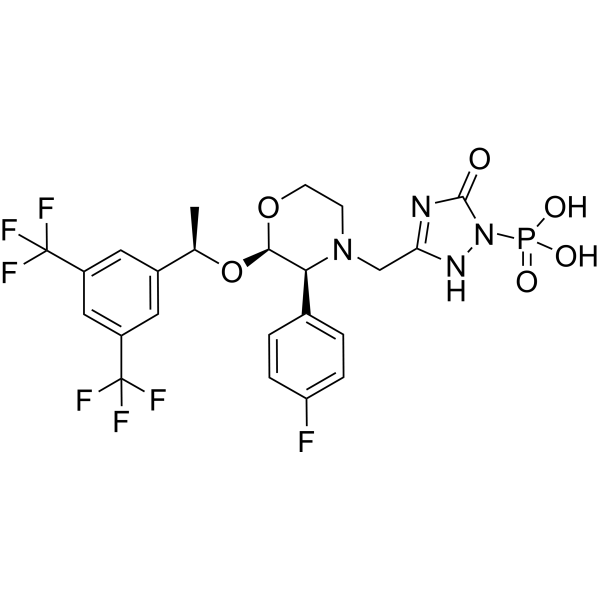 0 ImagesCat. No.: HY-14407CAS No.: 172673-20-0Synonyms: L-758298Fosaprepitant (L-785298) is a proagent of Aprepitant (HY-10052). Fosaprepitant is a neurokinin-1 receptor antagonist, which is development for the prevention of chemotherapy-induced nausea and vomiting (CINV).
-
Fosnetupitant
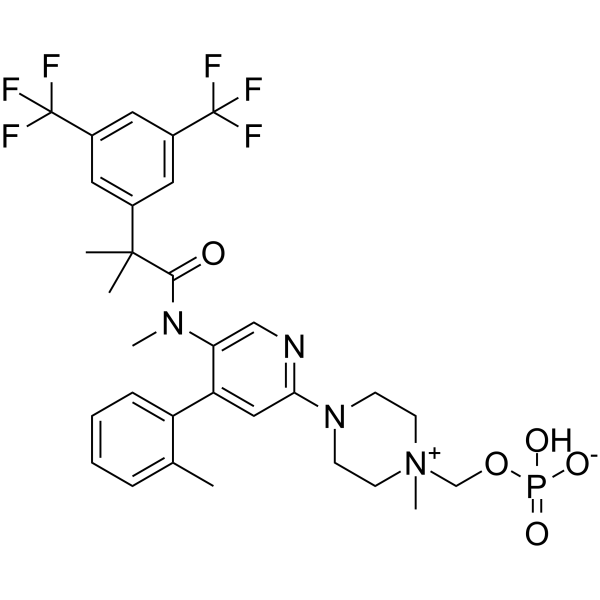 0 ImagesCat. No.: HY-17615CAS No.: 1703748-89-3Synonyms: PronetupitantFosnetupitant (Pronetupitant) a methylene phosphate proagent of Netupitant. Fosnetupitant (Pronetupitant) exhibits a pKi of 9.5 for human NK1 receptor.

![[D-Pro2] Spantide I TFA](https://file.medchemexpress.com/product_pic/hy-p1194b.gif "Click to View [D-Pro2] Spantide I TFA Product Detail")
-
Substance P(1-7)
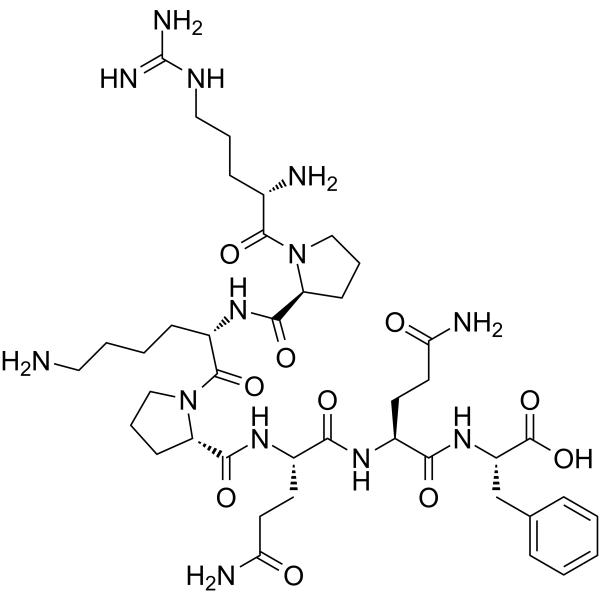 0 ImagesCat. No.: HY-P1485CAS No.: 68060-49-1Substance P(1-7) is a fragment of the neuropeptide, substance P (SP). Substance P(1-7) gives depressor and bradycardic effects when applied to the nucleus tractus solitarius.
-
Y1 receptor antagonist 1
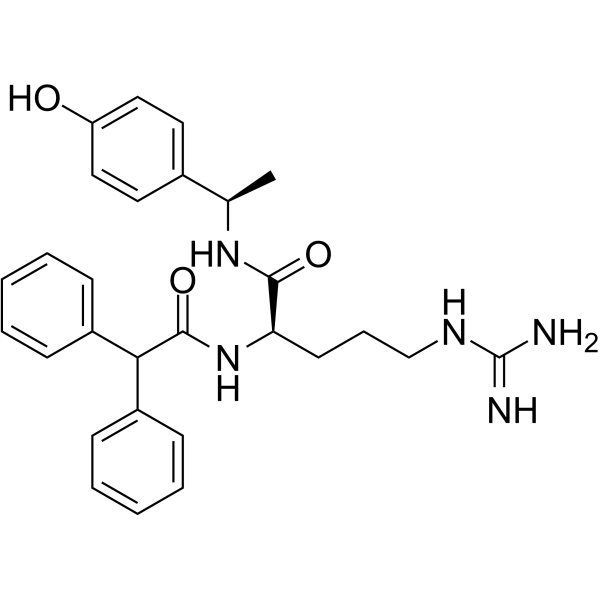 0 ImagesCat. No.: HY-101704CAS No.: 221697-09-2Synonyms: H 409-22 (isomer)Y1 receptor antagonist 1 (H 409-22 isomer) (Example 4) is a neuropeptide Y1 receptor antagonist. Y1 receptor antagonist 1 can be used for the study of cardiovascular diseases, such as vasoconstriction.
-
[Sar9,Met(O2)11]-Substance P TFA
![[Sar9,Met(O2)11]-Substance P TFA](https://file.medchemexpress.com/product_pic/hy-p1012a.gif "Click to View [Sar9,Met(O2)11]-Substance P TFA Product Detail") 0 Images[Sar9,Met(O2)11]-Substance P TFA is a tachykinin NK1 receptor selective agonist.
0 Images[Sar9,Met(O2)11]-Substance P TFA is a tachykinin NK1 receptor selective agonist.
-
Gly-Leu-Met-NH2
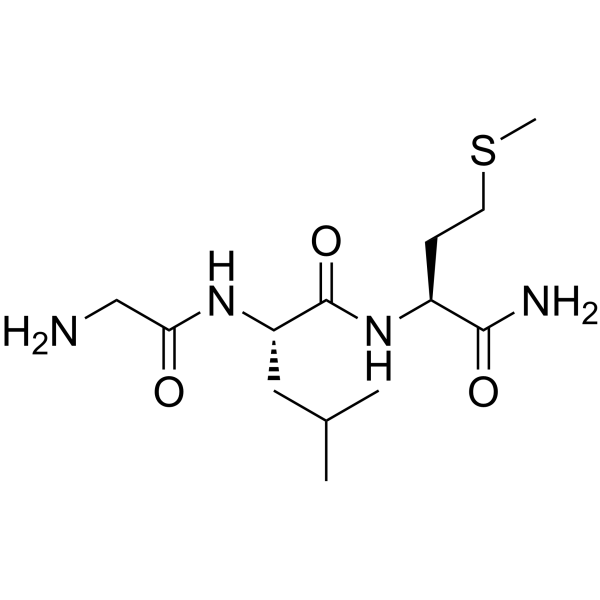 0 ImagesGly-Leu-Met-NH2 is a C-terminal tripeptide of Substance P (HY-P0201). Substance P is a neuropeptide.
-
Netupitant-d6
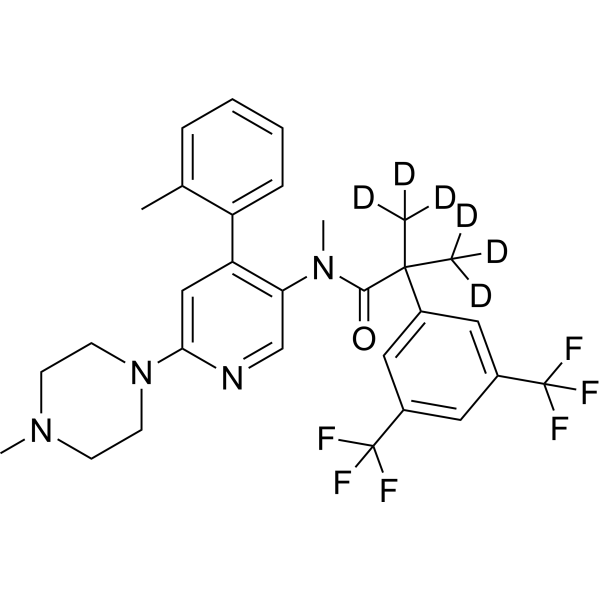 0 ImagesSynonyms: CID-6451149-d6Netupitant-d6 is the deuterium labeled Netupitant (CID-6451149), which is a highly potent and selective, orally active neurokinin-1 (NK1) receptor antagonist.
-
Spantide I TFA
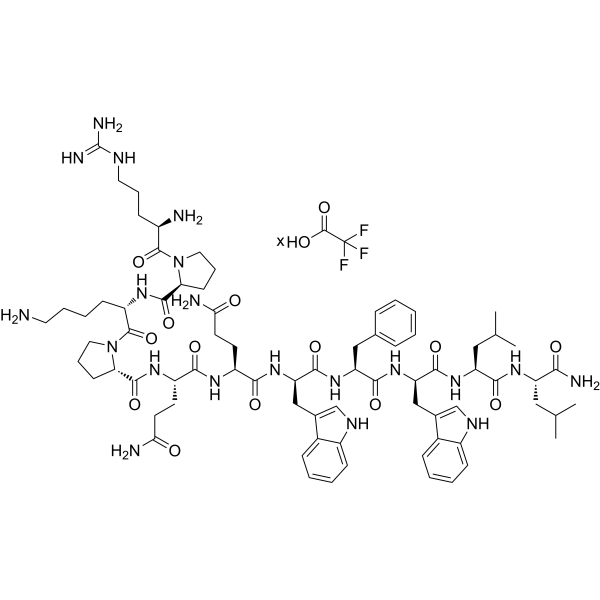 0 ImagesCat. No.: HY-P1194APurity: 99.32%Spantide I TFA, a substance P analog, is a selective NK1 receptor antagonist, with Ki values of 230 nM and 8150 nM for NK1 and NK2 receptor, respectively. Spantide I provides an approach to reduce type 1 and enhance the type 2 cytokine IL-10 in the infected cornea, leading to a significant reduction in corneal perforation.




